

Learn how to spot a wasp nest early with our guide. Detect hidden nests in your roofs, sheds, and gardens before they become a bigger problem.
Common places where wasps build their nests
Wasps often build their nests in dry, sheltered, and quiet places - like lofts and roof voids. Wasps can enter your home through broken tiles, gaps under felt roofing, or vents, and you may notice a steady line of wasps flying to one specific point, or you may start to hear a soft scratching sound.
Wasps also tend to build their nests near sheds, garages, and outbuildings. In this case, you should have a quick look around the eaves, rafters, and corners where any warm air collects. If you see wasps going in and out of a small hole in the timber or near a door frame in these places, a nest may be hidden inside one of the walls.
Wasps can also build their nest under your decking and patios, specifically, in the gaps between the boards and the soil. If this is the case, you might see wasps disappearing between the deck boards or coming up from the ground near any steps. Trees, hedges, and compost areas can also hide nests, too, especially if there's a hollow trunk or thick growth.
What a new wasp nest looks like
Wasps usually start forming new nests in spring, after one of their queens wakes up after winter and looks for a safe place to build their new nest. At first, the nest will be small and easy to miss, since only the queen will be there. However, once the nest grows, the number of wasps will increase.

In the early stages, the nest will often look like a small piece of grey paper that's stuck to a surface. This “paper” is made when the queen chews wood fibres from your fences, sheds, or old timber and mixes them with her saliva.
This mixture looks like a light, papery material with fine layers - much like a thin layer of cardboard. A brand new nest may be about the size of a walnut, a golf ball, or a small orange, depending on how long it has been growing.
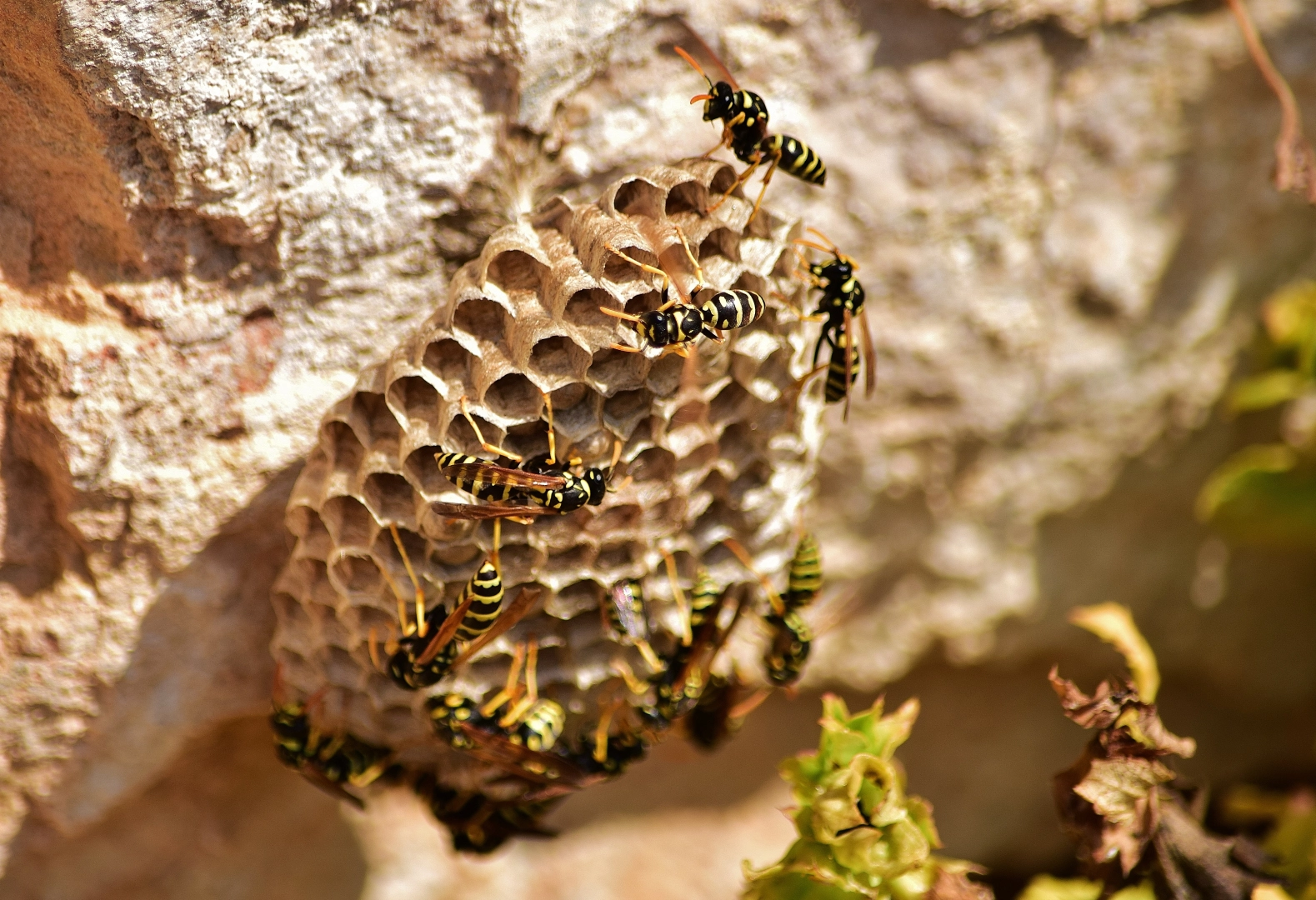
If you can see the nest clearly, you may notice that it's full of small, open hexagonal cells. These cells are where the queen lays her eggs and raises the first batch of young wasps.
At this point, the nest won't have its signature large ball shape; instead, many new nests will look like a little comb, especially with paper wasps. Other species of wasps may hide their nest inside your roof, wall, shed, or even the ground.
Early signs of a wasp nest
Wasps often start small, so spotting a nest early can prevent it becoming a bigger problem. One of the first signs is an increase in wasp activity in a specific area, such as near a shed, roofline, or hedge. You may notice wasps flying back and forth along the same path, which can mean they are building or returning to a nest.
Another early clue is a small, papery structure. Wasp nests are made from chewed wood and look like grey or brown paper. At first, they can be no bigger than a golf ball and are often tucked away in sheltered spots. You might also hear a faint buzzing sound if you are close to the nest.
Wasp behaviour to watch out for
One key behaviour of wasps to watch out for is repeated flying patterns to the same place. Wasps can travel back and forth along a steady route, much like a small “air road”. So, if you see several wasps entering and leaving one gap in a wall, roof edge, air brick, or shed cladding, it's a strong indication that there's a nest hiding inside.
Hovering is another clue. A queen or worker wasp may pause in mid-air near a crack or hole, as if they're checking the area. Then, it may land, walk around the opening and disappear inside. This behaviour is common when the wasps are still building their nest and learning the best entrance route.
Wasps can also land on your fences, garden furniture, sheds, or old timber and chew at the surface. They'll collect the wood fibres from these places to make the papery material that their nest is made from. If you see tiny pale marks on the wood where the surface has been scraped, or wasps staying in one spot for longer than normal, it's a clear sign that their nest is nearby.
How to check your home safely
Checking your home for wasp nests can help you spot a problem early on, but you must check carefully. Wasps can sting you if they feel threatened, and disturbing a nest can lead to several wasps defending it at once. Checking your home safely can protect you, your family, and your pets in the long run, and it can also help you avoid damaging your home.
Start by watching your home from a distance. Stand back and look for wasps flying to and from one spot. A steady “flight path” to a roof edge, air brick, or crack in the wall can be a clear sign that there's a nest.
Next, you should check any sheltered areas around the outside of your home, such as under the eaves, soffits, gutters, and roof edges. Check around your vents, pipe entry points, and any gaps in your brickwork. Don't forget to check your shed, garage, and outdoor roof spaces. If you spot wasps using a small hole in these areas, do not block it - instead, you should seal it, or poke it to check if there's any activity.
If you suspect there's a nest in your loft, don't pull back your insulation or lift up any boards unless you're sure it's completely safe. If you need to look, use a torch and listen out for a low buzzing sound, or wasps gathering near a beam, under felt, or around a vent. If you see more than one or two wasps, leave the area slowly to avoid disturbing them.
How to check your garden and outbuildings safely
When checking for a nest, always keep a safe distance and avoid sudden movements. Start by looking in common nesting areas such as roof eaves, sheds, garages, and dense bushes. Early morning or late evening is a safer time to look, as wasps are usually less active.
Wear long sleeves and avoid bright clothing or strong scents, as these can attract wasps. Do not poke or disturb anything that looks like a nest. Instead, observe from a distance and watch for repeated wasp movement in and out of one spot.
If you are unsure, it is best to stop and seek advice rather than getting too close.
Signs a nest is inside a wall or loft
A hidden nest can be harder to spot, but there are clear warning signs. You may see wasps entering and leaving through small gaps in brickwork, vents, or around window frames. This steady traffic often means a nest is inside the wall or roof space.
Inside the home, you might hear scratching or buzzing sounds coming from the ceiling or walls, especially on warm days. In some cases, wasps may appear indoors even when windows are closed, which can suggest they are coming from a nest within the structure.
You may also notice small marks or staining near entry points where wasps are active.
What to do if you think you have found a nest
If you believe you have found a wasp nest, do not try to remove it yourself. Wasps can become aggressive if disturbed, especially when protecting their nest. Keep people and pets away from the area and avoid blocking the entrance, as this can cause wasps to find another way out, sometimes into your home.
Make a note of the nest location and the level of activity you have seen. The safest option is to contact a professional who can assess the situation and deal with it properly. Acting early can make the process quicker and reduce the risk of stings.
Master Pest Control Manchester provides safe and reliable wasp pest control services across Bolton, Wigan and Manchester. If you have a nest in your loft, wall, garden, or outbuilding, our trained team can help. We act quickly, work carefully, and aim to remove the nest so that you can feel comfortable again.


